Thursday, November 30, 2006

FINAL ASSIGNMENT DESCRIPTION - DUE DECEMBER 12 - FINAL CRITIQUE DAY

Virtual Communities ASSIGNMENT - warmware : an assistive memory project
DUE DECEMBER 12 - FINAL CRITIQUE DAY

description by Judith Doyle : jdoyle@faculty.ocad.ca

For this assignment, you will adapt your "non-linear timeline" into “warmware” - an assistive memory project. Using the “timeline” that you’ve been working on over the last few weeks as the basis, you will create an emotionally-rich reminder system. It could include text reminders, sounds or music clips, photos, drawings, video clips, interactive characters (avatars) or a mix of these. Your reminder system may help to provide directions (an interactive map) or keep track of a list of things to do (like shopping lists) or it may be structured as a calendar that reminds the user of appointments. Your project may do all these things. As well as helping with planning and remembering the future, your device will be an archive (a diary or photo album) that helps keep a record of feelings (emotional responses) as well as events.

Your assistive memory project will be based on the work you have created so far in class, especially your virtual community and interactive timeline project. Who will use your system? Will family members and friends share this system (or a virtual community linked by technology, that might include doctors and caregivers, or online friends, for example), or is it just for one personal user? Please take into account the in-class feedback you have received from your classmates, instructors and our expert guests from the Memory Link program.

Your assistive memory device will be engaging and as simple as possible to use. It may be for fun, with gaming or creative features. It may be designed for handheld devices like the palm pilot, cellphones, MP3 players, web sites, alarm-clock type timers and other devices. It could include wearable elements. It could involve a combination of all these things.

Deliverables :
- Create a visual prototype for the blog, including a written summary description and an image
- Link to a detailed prototype with text, images or an interactive web site. If your project includes video and sound, provide examples : sound and video files
- Include a description of how your project will be customized for different users (how can people include their own images, sounds, video, drawings and personalized features).
- Include your name and photograph of yourself if possible

PROJECT DUE : December 12 2006 (Critique Day)

GRADE WEIGHTING : 20%

Tuesday, November 21, 2006

Chocolate- Nonlinear Timeline


I do my nonlinear timeline on chocolates. One box of chocolates represents the “calendar” which each individual chocolate contains a little note that can write the memory or reminder. Based on the experiences of the tastes and the chocolates colors, there are different interpretations to it. For example, Black and dark Chocolate with a bitter taste is a representation of a negative emotion which in this case, it will be an unhappy memory or reminder. On the other hand, a more colorful chocolate will contain a happy memory or reminder. The chocolate color and the sweet percentage represent the emotion of happy or unhappy memories.

PLAY! (Phase 2)

Moving


My non-linear timeline is based on places where i moved. Since i've been come to Canada as a visa student i moved more than 5 times because i haven't got my own house here. I have specific different feeling and memories for the each houses of the places. I'll use a map of Ontario and i'll put the picutures of different houses i've been moved. As the map of Ontario shows different colors and numbers by representing districtions, I'll use same idea of it, i'll put diffrenct colors of dots for the different feeling of the each house where i like the houses or not and why.

#1 Donmills and Yorkmils 69 Valentine Dr.
Peach color - feeling of excitement
first place came to Canada from Korea

#2 5 Northtown way 1113
blue color- feeling of blue..
Missing hometown
First experiment living in Condominum

#3 89 chestnut street
Hot Pink color-feeling of happiness
made lots of friends
First time habving loomates

#4 1229 Marlbough Court Oakville
Green color- feeling of comfort
First time living in apartment of countryside.
Had some trouble with contact with friends who live in Toronto.
#5 158 Byng Ave
Light pink color - feeling of pleasure.
living in my grandparent's house

#6 77 Finch Ave.
I havn't decide what kind of feeling i got
I'been living in the galleria apartment now..

Haunted Night


Visiting haunted house was an amazing experience. Even though things were man-made, it is still very scary and frightening that may give kids and adult to have bad dreams. Dreams are difficult to remember. Most of time, we can only memorize part of it and it fades away quickly. They are not presented in a chronological order. Moreover, They don’t make sense usually. Therefore, I decide to expand my original idea of drawing comic strips. I combined some drawings and shot video. It is about a girl who has a horrible dream on halloween night. The haunted house terrified her and left her a terrible impression. Every scenes is related, but they aren't showed chronologically.

Olive Jar


Leave it around the house -- Fill the Jar with Memories & Information. (over a day, week or months)
The red scrolls can be colour coded, using words and pictures. The jar fills as you fill it, until they it is too full to move freely. When you go to retrieve the memory olives -- you can only take from the top (the more recent entries) -- once enough room is made the olives will end up very mixed.

non-linear timeline final

My initial idea was to relate the events of my life and the memories that are attached to a roller coaster ride. However, as I did more brainstorming I found a better metaphor that would work for my timeline. My new idea revolves around the ripples in a pond. When a pebble is thrown into the pond, the surrounding water begins to ripple around the rock. I find that a valid connection between our brain and the way we recall the memories (or visions of the future).

I chose to focus this project on my trip to Cuba and how one simple incident brings me back to memories and events from the past, and how it leads to envisioning future events. Each event or memory will lead to another one, and this thought process does not proceed in chronological order, which is like a ripple idea. The core idea (the rock) spurs the memories (ripples) that surround it, and it spreads outwards. That is how I have designed my timeline.

Assignment Part 2 ( SUN and SHADOW)


This is similar to setting the correct time on analog clock or wristwatch (by moving the hand of the timepiece into proper position), when the project is done properly every move of the sun move the gnomon (straw) shadow into position so that the dial faces display the correct time. During winter the shadow will be under the straw and on top during summer. I used Toronto latitude 43 degree

How it works

o The gnomon should be parallel to the Earth’s axis, inclined at an angel equal to the latitude of the observer.
o Place it on a horizontal surface; the top of the straw point toward the north, or align the upper dial face so that 12 noon points toward north (as shown in the image).
This is done to tell the time in Toronto, and it can also be use to tell time any other locations.
➢ This is easy to carry around and use any where.

Non-Linear Timeline - Cellphone magic!

Expanding from my proposal of two weeks ago, I essentially proposed a program specified for a cellphone (thus usable on any sort of datebook PDA device) that is a catalogue of visually-translated information about individuals that can and should be expanded into understanding what sorts of emotions and internal factors are recognized with certain tasks and individuals.

Here is a visual of my system - It is an image and as direct a prototype of my system as is able to be made, due to my... lack of ability being able to tinker with cellphones directly.

Image and video hosting by TinyPic
A sample image of the 3rd level of the system.

The system ColourCODE is inherently a system that involves coded colour.

The first step of initiation is to basically have the phone directly interact with another individual - you could get a call (primary instigator), but also connect to other cellphones or the like (that the phone recognizes) via infrared, GPS, Bluetooth, etc.

Then, you are taken to the quick profile screen. There are three levels of profiles, depending on what sort of information you wish to process -

Level 1 - Offers a border that allows a customizable choice of hue, saturation and lightness - which can attributed to any 3 factors you wish to set them to. The default setting is personal assocation, understanding, and how you feel about that person.

Level 1 also offers the initial font setup - due to various font manipulations, the font is able to be set up for a visual cue as well. The default is what sort of role the person has in the world. Only pixelized fonts are available at the initial stage due to the inherent simplicity of many of these fonts. The fonts are only available in black.

Level 2 - Offers everything level 1 offers with added visual cues - The broder now allows for integration of texture and gradient intensity. The font system stays the same. Texture's default association is the past you share with the individual, and the gradient strength's default association is how stable that relationship is.

Level 3 - Offers everything level 1 & 2 did, which even more visual cues - the added factors of a background image, manipulation of colour of the font as well as allowing access to non-pixel fonts. Also, pattern is introduced as another cue. Pattern's default association is the understanding of how you would spend time with this person, while manipulation of colour is intensity of job. Serif indicates conservative traditionalism or the like, while the background image is indicative of what you usually do with said individual.

The system is easily adaptable to alarm and memory cues as well - due to many cell phone's internal scheduling programs, it's easily applicable.

Easily integratable.

Creative Commons License
This work is licensed under a Creative Commons Attribution-NonCommercial-ShareAlike 2.5 License.

Step (Assignment2)


Dancing is a universal form of expression and is culturally diverse just like music and art. From Ballroom to Hip-hop all the styles of dance influence and create it’s own culture and community. Even though there is a dance community I find it to be an exclusive community divided into groups of a different dance form. To be aware of the dance community you either be a part of a dance club or studio. All the dance forum and websites that I research are mostly focus on dance lessons and partner searching for ballroom or salsa.

Step is a virtual community base on dancers looking to network and collaborate with each other from all over the world. The Step forum will give dancers the chance to work with other dancers from different dance background. This will also give amateurs and professional dancers the opportunity to profile themselves and search to be part of a dance group or search for a dance partner. Step will also post up news and events both internationally and locally covering the dancing scenes and profiling active dancers and groups. Dancers can post up blogs, music, videos and other information that is related to dancing. Step is a great place to get in to the dance community and learn the dance culture both locally and international.

Emotional Experience

For my Non-Linear Timeline Project I wanted to create a way of cataloguing emotional experience over time. We discussed in class the idea that memory itself is not linear in the way it works and in fact it is sort of like a composite of various things built up into a whole. I wanted my piece to be a proposal for a way of recording and creating a sort of digital simulacrum for this memory process that could be carried around by a person on a PDA-like device or cell phone. With this program a person would be able to create a web of entries each with emotional experience attached. While this proposed program could serve those with cognitive impairment I could also see it serving a role for an average person as well: as both a personal encyclopedia and emotional dictionary.

I've given this proposed program the temporary title of EmotionBase (standing for emotional database) and created some sample operating windows. This program would allow a user to create and organize entries under four categories: people, places, ideas, or things. The user would be able to create links between relevant entries, add descriptions and photos to an entry (which would work best on a camera equipped portable device), and search these entries through a number of methods. However, what separates this program from a more typical database is that the users are also able to attach emotional experience to each entry over multiple instances--much as memory is altered by repeated encounters with something. These entries would be registered by adding a note and by picking spots on two charts: a 'fun-boring' chart and an 'important-unimportant' chart. This nomenclature for my charts is decidedly inelegant at the moment and I would be more than willing to replace it with a better emotional experience model. Each of the two charts is represented by a colour scheme: blue-red for boring-fun, and green-yellow for unimportant-important. These colours are represented in the background of each entry and will change with each emotional entry added to a database entry. This will give the user an instant idea of their feelings on the topic, without reading the text, and the fact that it will develop over time will allow for their emotions to change and grow on a certain topic.


On the left is a sample of what the program would look like on a portable device (in this case a cell phone). This window shows a 'place' entry for the OCAD main building and the background yellow hue shows that it is IMPORTANT on the importance scale and neutral on the FUN scale. [Click to Enlarge]

On the right is a sample of the emotional experience entry form for a sample item. Notice how the background of the item changes as the two sliding scales are moved. [Click to Enlarge]


These are prototypes for the front end screen for this program and for the various section screens. The 'Main' screen shows the various ways of searching through the entries and the most recent entries. The section screens show samples of people, places, things and ideas, each with there own emotional experience shown as colour across the back
of the entries. Click to Enlarge: [Main] [Section Screens]

The visualizations of the various colours for the emotions and the scale that the emotions are entered on could be played around with quite a bit so that the individual visualizations are unique and expressive. I feel that with a tool such as this each individual user could create and maintain unique non-linear memories through a digital intermediary. Each person who used this would create their own unique web of relations; each of them becoming pieces of art.

-Jacob
Creative Commons License
This work is licensed under a Creative Commons Attribution-NonCommercial-ShareAlike 2.5 License.

Monday, November 20, 2006

Forget me not...


The image of a standing in front of an open fridge and not remembering what it was that you were looking for really stuck with me after the presentation on Tuesday afternoon because I felt it was one of the most common issues. I thought I’d use the contents of the fridge as connections to the bits and pieces of the emotional story. This way the viewer is waiting for or gets the idea of ‘what’s next’, what am I looking at, the viewer gets the sense of frustration and randomness, the way many people with memory problems often feel. The interface I have chosen to use is an internet website. Every time you roll over an item in the fridge it will link to a particular emotion or memory attached to the taste, smell, look or feel of each food item. The website will allow people with memory loss to document their memories in their own account or fridge. They can customize their own fridge according to their memory progress they make, this way the website can encourage their random non-linear memory patterns, possibly encouraging new random links, almost in the same fashion as brainstorming. The site will document blogs, and other media dealing with memory issues connecting many individuals with memory loss.

For example when someone logs into their fridge account on the website they can investigate it buy moving items around in the fridge, giving certain items priority or significance. The example I have shown here is that if you clicked on the Mayonnaise in this person’s fridge you would find that they have associated it with memories of their father’s distaste for it, not necessarily their own experiences with the item themselves. After clicking on the Mayonnaise the website would make a picture chart showing that it is connected to a specific memory/thought and then when you scroll down it will explain it in words.


Tina Debi


Creative Commons License
This work is licensed under a Creative Commons Attribution-Noncommercial-No Derivative Works 2.5 License.

Tuesday, November 14, 2006

sound


My non-linear timeline is in the form of a musical note. I thought that sound and music could be the gateway to the stir up emotions or memories, since we learn the majority of our experience through our senses. Sound and music can evoke discomfort, pleasure, fear and many other emotions. The palm pilot is one of many possible platforms to help the user to remember.

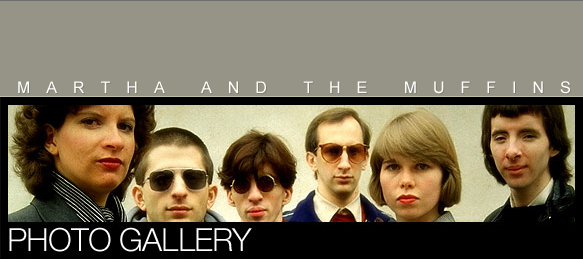
Martha and the Muffins


Could this be true?! Could our very own professor be a member (or have some sort of connection with) Martha and the Muffins? I didn't think of obvious terms of connecting Martha Ladly to Martha and the Muffins, however, what was brought to my surprise was our very own OCAD website has referenced Martha and the Muffins on Martha's bio! SUSPICOUS!!!

Also, does anyone see a striking similarity with someone in the band to Martha Ladly? Martha Ladly ... is that you?

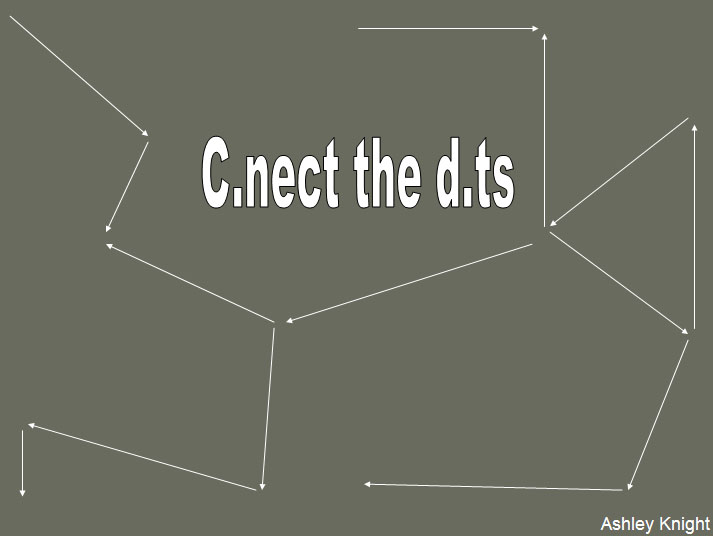
C.nnect the D.ts


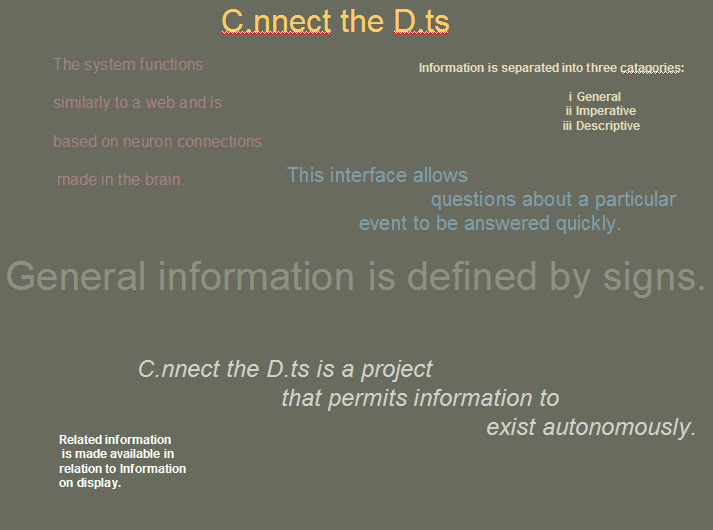
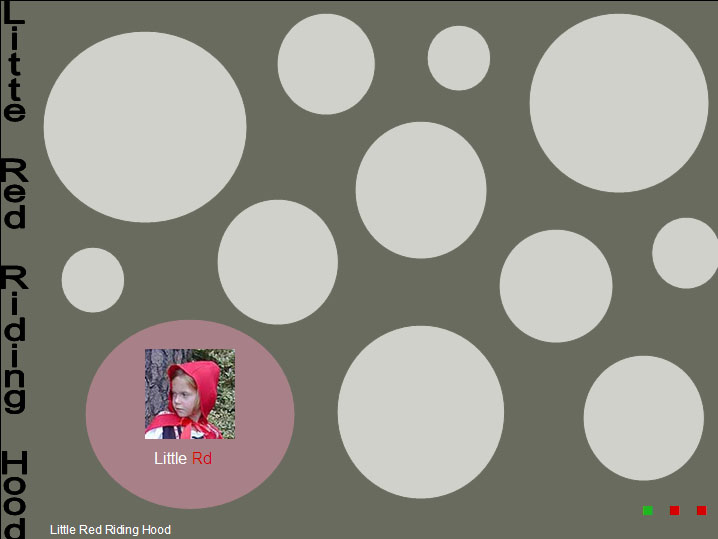
These are screen shots from a power point that represent the non-linear time line I am proposing.

This non-linear time line is based of the way that that neurons form ideas; connecting to eachother through related information. I built the model as an interactive face. I had hoped to make it into a tourable website however the scripting became a problem due to time and knowledge constraints.

Basically bits of information are connected to make cohesive ideas that exist autonomously from the rest of the information. Interactivity allows the user to form specific questions.
Who was there? A: Betty, Mark, Chris
Who is Betty? A: Betty is the beautiful girl like.
What did Betty do? A: Betty brought cookies over.
What else happenend? A: The cookies were stolen.
By Who? A: By Mark.
Why? A: Because he wanted to play a prank on you.

By going through a process of illimination of information a specific and unique collection of data creates a simple idea of the event:

The girl you like, Betty, brought you cookies that were stolen by Mark as a joke.

However, this remains just a piece in an over all event. The advantage of this model, however is time is not the only non-linear element. Information is divided into pieces and is refused unless it is asked for. This allows the user to ask specific question and retreive specific answers without having to sort through unnecessary information or be confused by it.

Non-Linear Emotional Experience


My non-linear timeline project idea is based on the idea that experiences and emotional information is accumulated over time and over multiple experiences. Rarely are our emotions and feelings about a person, place, thing or idea formed over one meeting or interaction: rather they are formed through a build-up of experience. I want my project to give the user a way to record this emotional experience and build-up as well as to link that experience to other relavent emotional ideas. I also want the user to be able to call up that experience easily and simply, so there has to be a way to 'tag' objects for quick recall.

This project was inspired initially by
semapedia tagging and the user-created feedback ratings on online shopping sites such as ebay. I want to try to create a similar way for people to catalog the buildup of emotional experience (the bad an the good) so that they can create an overall image of a person, place or thing. I want the user to be able to 'chart' their emotional respones to things using some sort of scale. Each of these things should be able to associate with other related things on the timeline so that the user can compile and view emotional responses.

I want the end result to be a program that could assist both the average person and people who need cognitive assistance as we are looking at in this course. I want it to be a web shaped non-linear set of associations between ideas, people and places. The user of the piece/program should be able to create associations and chart emotional responses to those things over time. I also want there to be some way that the user can search this web of objects, people and ideas to locate specific objects in the web either through a 'tag'-like search or more traditional means. I want to create something that would address the issue of building up a network of associations and emotional responses.

-Jacob

Creative Commons License
This work is licensed under a Creative Commons Attribution-ShareAlike 2.5 License.

non-linear rollarcoaster


I want to shape my timeline in the form of a rollar coaster. The idea is that where ever the memory takes you, you will always end up at the starting point. For every rise, there will be a downfall (a drop), also the hoops of the rollar coaster can relate to the repetition in memory. My metaphor of the rollar coaster is best at describing emotions, since that is the key point I want to convey in my timeline.

Monday, November 13, 2006

PLAY! (Phase 1)


Imagine a future when palm pilots have already mastered the perfect user-friendly interface for amnesiacs so they have complete control over the bare necessities; thus, they are no longer dependants on another person to live day-to-day lives.

Studies and research are constantly being performed to help those who have been identified with a condition in hopes to get everyone back to the state of being normal. Therefore, rather than finding a cure to amnesia, or making day-to-day life easier for troubled victims of this disease, I want to incorporate a sense of play to this project.

When amnesiacs have no chores to complete, no doctor’s appointments to attend to, will they still want to go outside?

Imagine a scenario where you just wanted to go for a walk and experience the community around you. What if amnesiacs could record what made the experience memorable to them? So as the person walks through a space, they would record something (whether it be a picture or a voice message) that made the experience personal to them. The next time that person walked through the space, they would be reminded (from some sort of technological device) what was significant about that space to them, and thus, built up a database of memories to prevent users from constant repetition. For example "I didn't know that statue looked so phallic!" vs "That phallic statue reminds me some art I did in highschool". Thus, the experience of something in a space is building up.

The overall goal of this project is not to help memory loss victims find their way around a city, but to help the user enjoy the unique spaces within the city on an intimate level.

Friday, November 10, 2006

Timeline


Non-linear timeline

Stairs – rise and run. Life itself can be compared to a set of stairs. Each rise and run of the stairs can represent the challenges, accomplishments and disappointments in life. Stairs are made of uphill and downhill challenges and plateaus all varying in size and effort required to overcome, which inturn will determine our next step. The different events and stages of our life can be shown in the profile of a set of stairs. Each rise and run of the stairs vary in height and length as do the events in our life. A long rise could resemble a challenge. A long run; a joyous event.

Clock – The sum of all the parts are equal to the whole. Most mechanisms are made of several pieces, each part contributing to the machine as a whole. Some of the parts may be considered to be more important than others, but the machine wouldn’t work with out all of its parts.
Some of our memories are more vivid or clear or significant than others. Some are recent, some are distant. All of our memories are important.

Thursday, November 09, 2006

Resonance of Memory in the Moment- TIMELINE

What allows a memory to remain with us for our entire lives? What allows us to constantly refer to it, call upon it? Why do we forget even the most important of things sometimes? Why can we occasionally remember the most mundane, unimportant details?

If I am sitting in class one morning, discussing branding, but I'm daydreaming about the time i went to Mexico with my family in 8th grade, chances are when I look back on that morning later in the day, I'll will remember more about mexico than ever before, yet what homework was assigned or what was spoken about in class may be a blur, a mess of images, many names, specific times, but the content, my sense of what branding is and how it relates to my course, is lost in a sea of those images, with beaches, aztec ruins and sunny skies.

Through this, we can speculate that what we think or pay close attention to is usually the will of our desire, which sort of morphs forms and transmits itself in many different ways. So sometimes we really want to be in class, and remember everything that is said, and sometimes we want to be in Mexico, or perhaps a child again.It is hard to say whether we have any control over these types of desires.

So why does desire allow some experiences to resonate and play over and over again in our heads, like our favourite song, yet some dissappear?

In this project I would like to compare the experience of an event to a musical note being played and the memory of the event as the resonance of a musical note. But what allows a memory or the resonance to last is not necessarily how it was played during the event but how often that particular note, or a similar sounding note, is heard in the moment/present.

So what can be created is a map of memory in time, using the moment/the present as a central figure, linking this moment to what was desired at different times, but allowing the frequency of their occurance in our experience to determine their distance from the moment, rather than the amount of time that has passed. I may have heard my favourite song once in my childhood, but if I continue to sing it to myself, or if I contiually hear its influence in other songs, I may never need to experience the song again, yet i'll never forget.

But I've already forgotten what I was reading about on the subway this morning because I was thinking about christmas holidays a little too soon.

~joe.d.

Tuesday, November 07, 2006

Moving In Ontario


My non-linear timeline is based on places where i moved. Since i've been come to Canada as a visa student i moved more than 7 times because i haven't got my own house here. I have specific different feeling and memories for the each houses of the places. And also as time passed by the each houses are changed, therefore i can document and write about how the places are changed. I'll use a map of Ontario and i'll put the picutures of different houses i've been moved. As the map of Ontario shows different color by representing a distriction, I'll use same idea of it, i'll put diffrenct colors for the different feeling of the each house where i like the houses or not and why.

Non Linear Time Line


I've based my non-linear timeline on how the brain creates neuron connections. One point symbolizes a single piece of information (one point like an axon) that connects to several other pieces (like multiple dendrites).

You deal with one piece at a time and follow the multiple pathes to related information. As such information is separated and catagorized into two teirs.

1. Important and essential informaiton about the event. (Who, What, Where, When, How)

2. Related Information of the event.

3. Other Information.

AMDb Virtual Community (Ass. 2)


A great place to make professional contacts and post your accomplishments.
You're a STAR!

Olive Jar


Olive Jar - Jason Whetter

While the jar is almost full, you only have a choice of a few because you can only reach the ones jammed at the top (a selection of 5-10). As some are taken away, the olives are able to move freely and it becomes more mixed up (luck of the draw as you stab around aimlessly.) Since there are soo many olives, each one would contain a small amount of information. This is non-linear because –there is no lines, the olives become completely out of order as they float in the jar.

The pimento unfolds and exposes the scene or part of the story (words)

Non- Linear Timeline Idea

© copyright 1999-2006 Getty Images, Inc. All rights reserved.

The image of a standing in front of an open fridge and not remembering what it was that you were looking for really stuck with me after the presentation on Tuesday afternoon because I felt it was one of the most common issues. I thought I’d use the contents of the fridge as connections to the bits and pieces of the emotional story. This way the viewer is waiting for or gets the idea of ‘what’s next’, what am I looking at, the viewer gets the sense of frustration and randomness, the way many people with memory problems often feel. For instance if the memory I was going to explore was the birth of a child perhaps the carton of eggs could link to the idea. Every time you roll over an item in the fridge it could link to a piece of writing or a picture of something. I am also thinking that each piece of the memory whether it is a picture or piece of writing will be shaped into a puzzle piece such that after view all the bits separately you can put them together in various different ways, taking inspiration from the ‘Meanwhile’ project at the hybrid. I also want to use an element of poetry because I think it is really tied into the aspect of emotion.

Tina Debi


Creative Commons License
This work is licensed under a Creative Commons Attribution-Noncommercial-No Derivative Works 2.5 License.

Sun and Shadow


This is a really short story that use to be told by my grandfather when he was alive. In the olden days when there was no watch to figure out what the time was. When there wasn't any light to stay up late. Back in my country (Ghana) they depended on the sun and their shadow to tell time. Also there was no light so people at that time did not wake up early till 6 a.m. when the sun comes out. Although they could not tell the specific time like 6:45. They still knew it was 6 a.m. or 6 p.m.. How? They will stand in the sun and face any direction (N,S.,E. or W.)it does not matter. Direction good enough for them to see their own shadow. According to them when is 6 a.m. your shadow have the actual length of your height, and when is 12 in the afternoon your shadow will be under your feet. How did they know it was am or pm? When your shadow is facing west is evening and when is facing east is morning. The Sun rises from the east and set at the west. At that time because they did not have lights. They go to be bed by 6 latest by 7 when their shadow is longer than their actual height. Beside, they did not have a choice to stay up. When the Sun is set(gone) the place start getting dark.

Non-Linear Timeline

The subject matter I would like to focus on is the period in Ancient Chinese history known as the Three Kingdoms period - it is the aftermath of the Han dynasty, and the pre-cursor to the Jin dynasty.

The reason I chose this subject matter is the fact that there are many, many instances of comparison in which events can be ascribed as directly related, even though they are not related in a typical linear fashion (emotional content as opposed to cause and effect).

In effect, what would happen is that it would use the historical figures as place cards and what would happen is that the timeline would be empty, while understanding individual relations would be the key to cememnting and creating the timeline. Basically, you'd have two factors in choosing family lines - if those match up, then you can narrow it down to individual and see if it fits into an event.

- Ryan Singh

Sprawling Worlds

When language enters the world through speech, art, or any other type of sign, we tend to understand or believe that the meaning we immediately give to signs is concrete. Therefore, when the time comes to interpret signs, we understand them one way. Many thinkers throughout history have come to believe or understand things another way, where the sign signifies nothing but other signs, and the meaning of the sign shifts and mutates relative to an individuals experience of the world, usually filtered through cultural associations. Though this understanding confuses our world quite a bit, some even suggesting that no actual communication could ever exist because of this interpreting problem (interpretosis), one could also take a glimpse into the way our mind uses signs and language to see the world, and how our mind operates.

With the example of Finnegans Wake as a point of departure, FinnegansWiki shows these concepts by taking every word within the book and linking it to the other words that it could be associated with. Yet, the Wake is already fully displaying these concepts because of his created language based on the deconstruction of English, and the altering of reference by the alteration or combination of words. This gives some insight as to what Joyce was thinking about during the creative process of writing the Wake, and shows how language functions. But this is how all language works, and this type of analysis shouldn’t be limited to interpreting a fictional language, this process could be even more revealing if it is used on common language, possibly classical literature, or most importantly, our own writing.

The online community that I will purpose is something related to FinnegansWiki, but it will be much more community based, and will work with many different written works. Sprawling Worlds will be a database of writing ranging from personal writing, to classical literature, to news articles, to science reports. The website will have a script similar to the Wiki software, but will run on every piece of writing, and will link every single word to every possible connection.


business2business


BUSINESS2BUSINESS

Be successful in business! Bussiness2bussiness is a virtual site where business minded people are able to interact with other like-minded business people. They would be able to share ideas, thoughts, and information on all matters business. Business people could post ideas, thoughts, experiences, tips and questions. Other related services, tax info, laws, financial services.

Features:

Job opportunities
Business contacts
Business/financial/tax info
Post ideas/experiences/stories/advice
Trends

Assignment 4- Non-linear timline


I would like to compose a story about my experience of visiting haunted house in Halloween. This is the first time I visited the haunted houses. It was exciting, scary and fun. Each house had its own theme and atmosphere. Some rooms are bright and colorful with beautiful pictures that we are able to see things clearly. Other rooms are so dark that we didn’t even know where to go and who was beside us. Suddenly, ghost jumped out and screamed. We were frightened, run and screamed as loud as possible. At that time, I had various emotion and different reaction in response to those houses. Even though the line up was very long and tiring, it all worth it, that I had so much fun.
I am thinking to create a short story of my favorite haunted house. It is a comic strip with simple, easy understanding and appealing images. It will describe the things I saw and the emotions I had. It will have a plot from beginning to the climax to the end. Text and sound will be included to achieve an interesting and exciting short story to read.

Monday, November 06, 2006

The chocolate Store…


On the second week of May, in 1995, it was the first Mother’s Day I celebrated with my parents in Toronto. Close to the Mother’s Day, one day after school, I hang around with few friends around a plaza that is close to school; suddenly we got attracted by this small but “decorative” chocolate store, when we went in, I am so nervous that it is actually my first time going into one of the “expensive” treats “galleries” but because I am so amazed by the small delicate chocolates and the beautiful containers, I decided to buy one as the first given present to my mom. I still remember the chocolate was designed in a small pig and put into a red cute little box. One year later, I moved back to my country and stayed there for more than 5 years, I keep on wonder whether the chocolate store still exist or not.
Until high school I came back to Toronto, I went to visit the same plaza and to look for the chocolate store; therefore, it is still where it used to be. For this time, I went back again on Mother’s Day and buy the Chocolates, but this time it is for all my families, it’s my way to “celebrate” the memory of this place, my second home-Toronto.
This chocolate store is very important to me and it has just celebrated their thirty years anniversaries. It is often pack with costumers and they give the costumers the best helps and services. Are you interest to know more about this delicate chocolate store? Let me tell you more about it!

Wednesday, November 01, 2006

Coming soon... Google Universe


Does anyone else think that Google is going to own the Universe?

I mean, I use their website for my primary search engine, I even check first with Google Images before using my 5 mega pixel camera that I paid $700 for three years ago, I use Google News to see what's happening in Canada and the world, I use their maps for driving directions, as a Google Geek I also check out major cities all over the word with Google Earth, I use YouTube for all videos but now I find it's owned by Google. Same with Blogger. Ohh yea, and Google also owns all my emails since I use Gmail as my primary online address.

Should I be worried? Or should I just try to find a way to work for such a successful corporation?

If you can't beat them... join them. Right?

I'm just wondering what you guys think on this...